Pedals not Pegs
After years of ebike-regulation ambiguity, lack of enforcement, and blatant non-compliance by off-shore, fly-by-night manufacturers, the States in the U.S. are beginning to implement regulations to define ebikes and how they are used. This is a step in the right direction, and one that the industry has embraced. But this has been driven by the media refusing to properly identify ebikes, as it is e-moto antics that drive their ratings.
For more than a decade we’ve had the ebike class system:
Class 1: No throttle but pedal assist to a max speed of 20 MPH
Clas 2: Throttle and pedal assist, but max speed of 20 MPH with power
Class 3: No throttle but pedal assist to a max speed of 20 MPH
These regulations produce safe ebikes at sane speeds used by commuters, mountain bikers, cargo-bike haulers and people who are older or disabled that cannot ride a regular bicycle.
Then there are e-motos, which look a little like an ebike. They don’t make sounds, look minimalist, and end up under a Christmas tree when a young person convinces their parents these are just harmless ebikes.
E-motos. though, are electric motorcycles. They don’t have pedals. They have footpegs and can go speeds of up to 60 MPH. Young people ride them on streets—usually recklessly—and have been able to get away with it because of the confusion over whether these are ebikes or not.
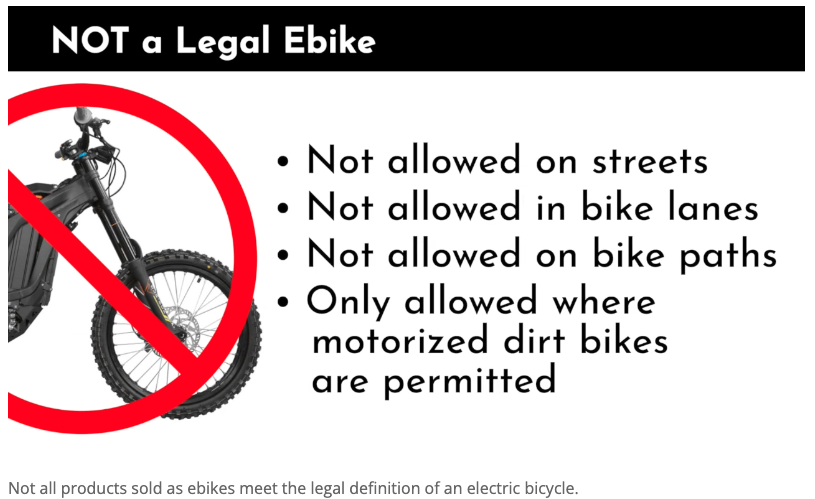
TeenEbikeTraining.com’s great lesson defining what is and what isn’t an bike
The difference is simple. If it has pedals, it is an ebike. It may go faster than the Class system allows, but it is an ebike. If it has footpegs, it is a motorcycle.
But motorcycles are legal on roads, so what’s the problem with e-motos? Almost every lightweight, e-moto is NOT STREET LEGAL. To be street legal in the U.S. (and similar laws apply for the EU), the vehicle must be compliant with a long list of NHSTA federal motor vehicle safety standards (FMVSS). These include Department of Transportation (DOT)-approved lights, mirrors, turn signals, brakes, tires and other equipment. Almost all e-motos do not meet these standards and are illegal on the roads.
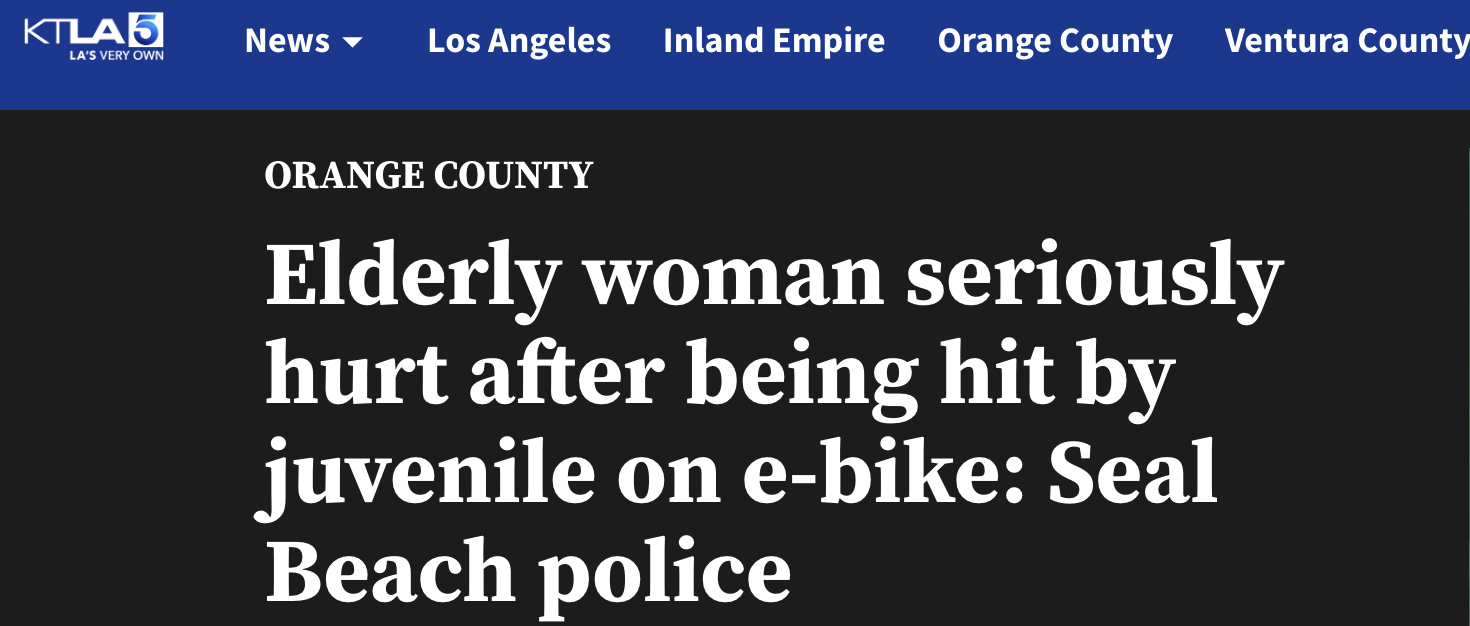
A story from March 13, 2026 about a Surron rider hitting a pedestrian
mis-identifying it as an ebike
But the media continues to identify e-motos as ebikes, as they make great stories. They are quick to throw the ebike label on these illegal motor vehicles daily. It’s irresponsible journalism that is influencing outrage and regulatory action that is affecting the rights of kids, adults and senior citizens that use legal ebike responsibly.
We recently saw industry veteran Hans Rey try to redefine the ebike laws in the media with a myopic mountain-bike filter—understandable because he lives on Southern California mountain bike trails. But his manifesto directly alienates millions of senior citizens who use ebikes to regain fitness and health.
The legacy mainstream bicycle media continues to report accurately. Outside ran a great summary of this situation seeking to hold e-moto manufacturers accountable.
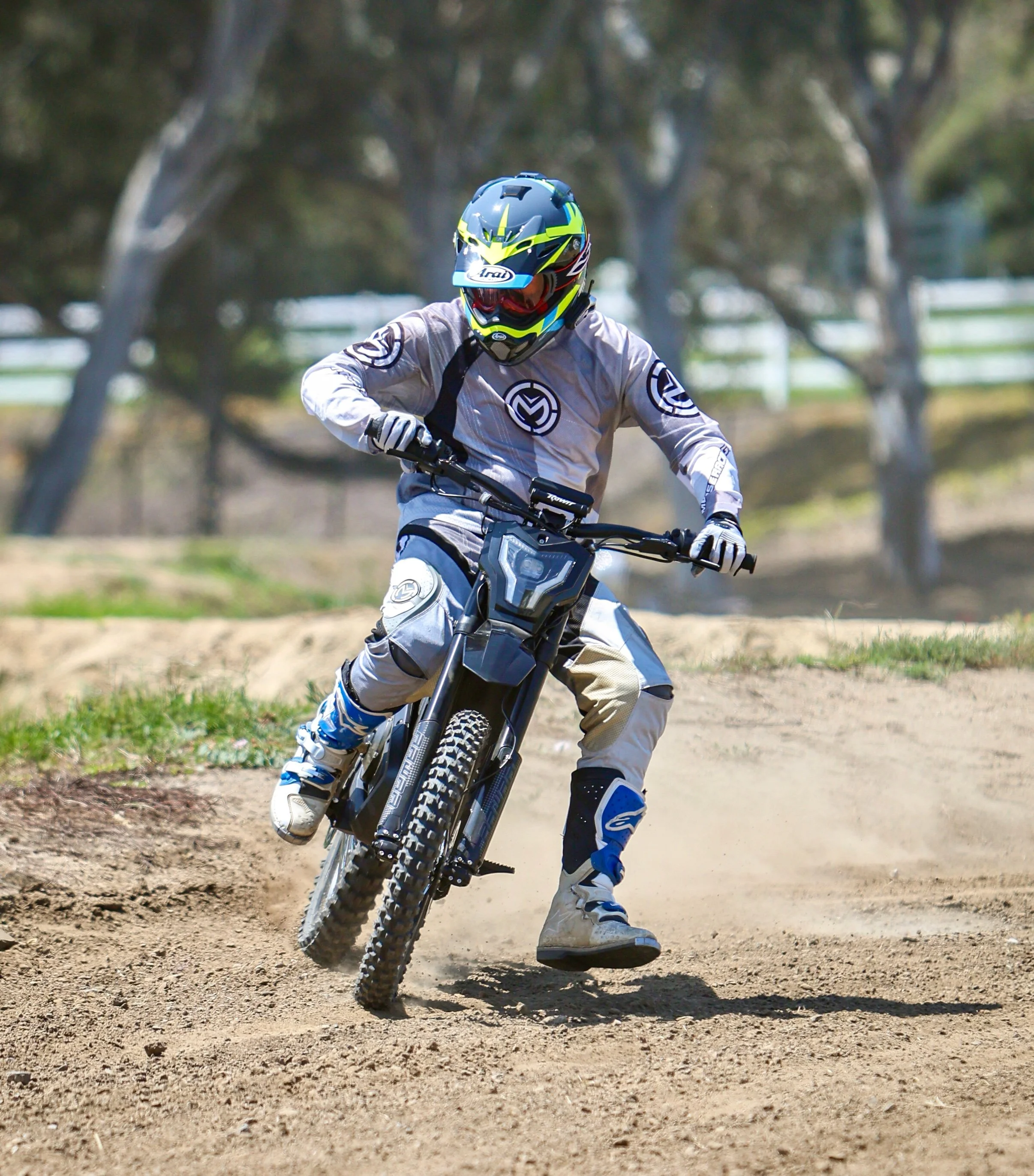
Nothing beats the fun on an e-moto on a motocross track
E-motos are not illegal everywhere, and they are incredibly fun to ride legally. As off-road vehicles, they can be ridden on private land, privately-owned tracks, or in some (but not all) state off-highway-vehicle parks. There a few things more enjoyable than riding an e-moto on a mini motocross track.
E-motos terrifying people on the streets and injuring kids was overlooked for so many years. It is a Pandora’s box we are going to have a hard time closing. We have to get them off the street or properly approved, though, to protect not just their riders and the public they threaten, but the entire legal ebike industry.